
CHRONICLE NEWS SERVICE
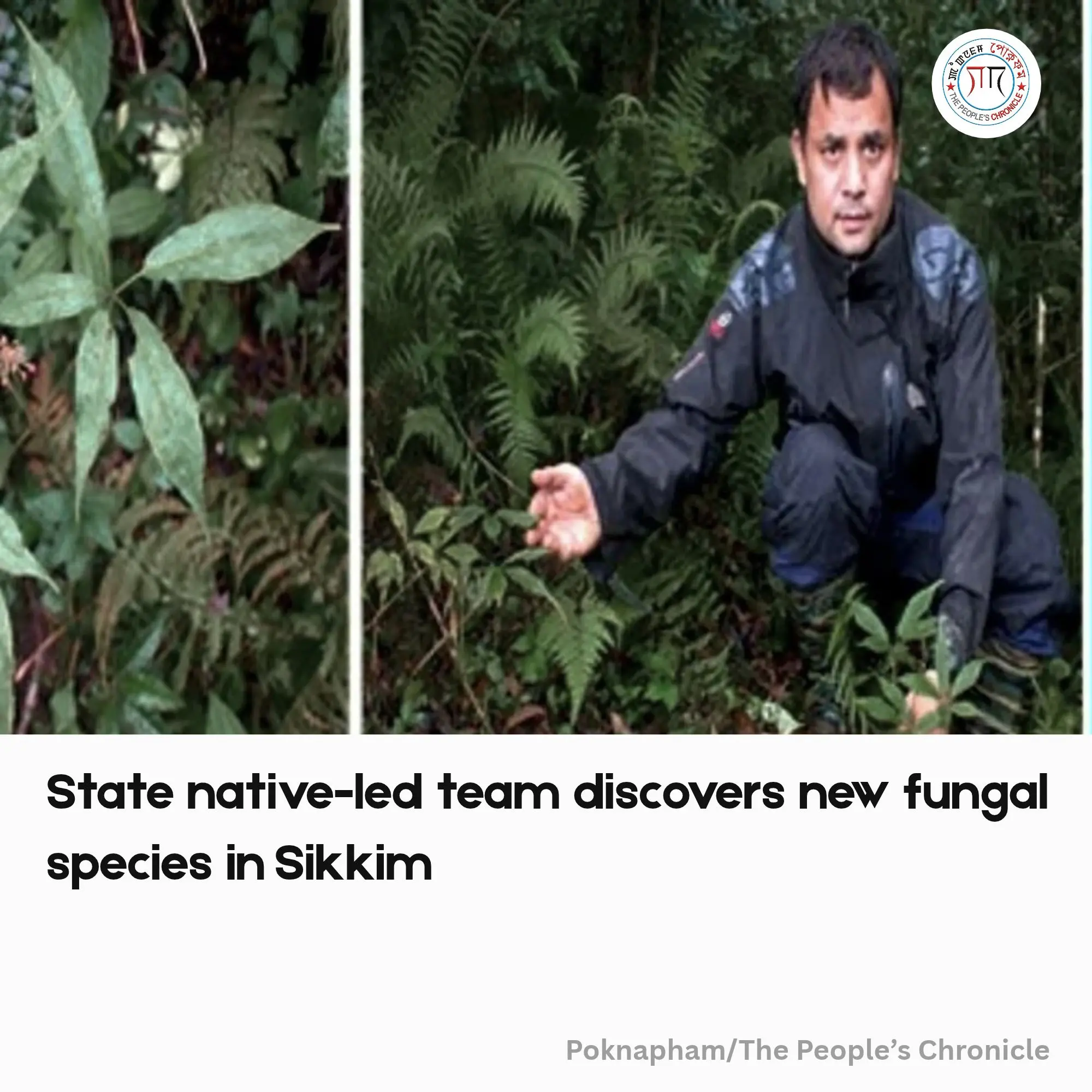
IMPHAL: A team of microbiologists led by Dr Laishram Shantikumar has discovered a new fungal species associated with the rhizome of Panax sokpayensis, a rare medicinal plant found in the Sikkim Himalaya.
The newly identified species, named Mollisia sokpayensia, was isolated from plant samples collected at Jorbotay in Uttarey, West Sikkim, at an altitude of 1,800 to 2,300 metres above sea level.
The fungus was named after its host plant in recognition of their association.
The research team also comprises Subecha Rai, Gajanan V Mane, Dr Rohit Sharma and Dr Thounaojam Salvia.
Dr Shantikumar Singh is an associate professor and programme head at the Programme of Microbiology, Faculty of Science, Assam down town University, Guwahati, while Dr Salvia is a professor and principal of the Department of Microbiology and Immunology, CPMS College of Allied and Healthcare Sciences, Guwahati.
Both are residents of Khangabok in Thoubal district.
The fungus was isolated using Potato Dextrose Agar, a commonly used culture medium.
It showed notably slow growth, with colonies initially appearing cottony and brown before turning blackish-brown.
Under laboratory conditions at 28 degrees Celsius, the colonies grew to 2-3 centimetres in diameter after six days and approximately 8 centimetres after 14 days.
Fungal endophytes are microorganisms that live inside healthy plant tissues without causing visible disease.
They may offer benefits to their host plants and are increasingly studied as potential sources of bioactive compounds for medicine, agriculture and biotechnology.
The rhizome of P sokpayensis has traditional medicinal uses, while Panax, commonly known as ginseng, is a high-value commodity with substantial international demand.
Although the Chinese Himalayan region has been extensively studied for Panax diversity, medicinal properties and associated endophytes, research on these resources in the Indian Himalaya remains limited.
The discovery highlights the microbial diversity of the Sikkim Himalaya, part of the Indo-Burmabiodiversity hotspot, and createsopportunities for further investigation into the fungus's biological properties and potentialapplications.
Cultivable endophytes could eventually provide useful microbial products while reducing repeated harvesting of rare medicinal plants, although their practical applications require further research.
The findings have been published in Fungal Diversity, Volume 136 (2026), under the series“Fungal Diversity Notes: Notes on Worldwide New Species and Records”.
The research was supported by an externally funded project awarded to Dr Shantikumar Singh by the Department of Biotechnology, Government of India.